Letters, fragments, and the things kept because they could not be carried.
A letter, a crease, a familiar plan, or a repeated mark can hold what distance has made incomplete. Memory survives in the work without being made whole again.
Letters from Home, 2004Zarina
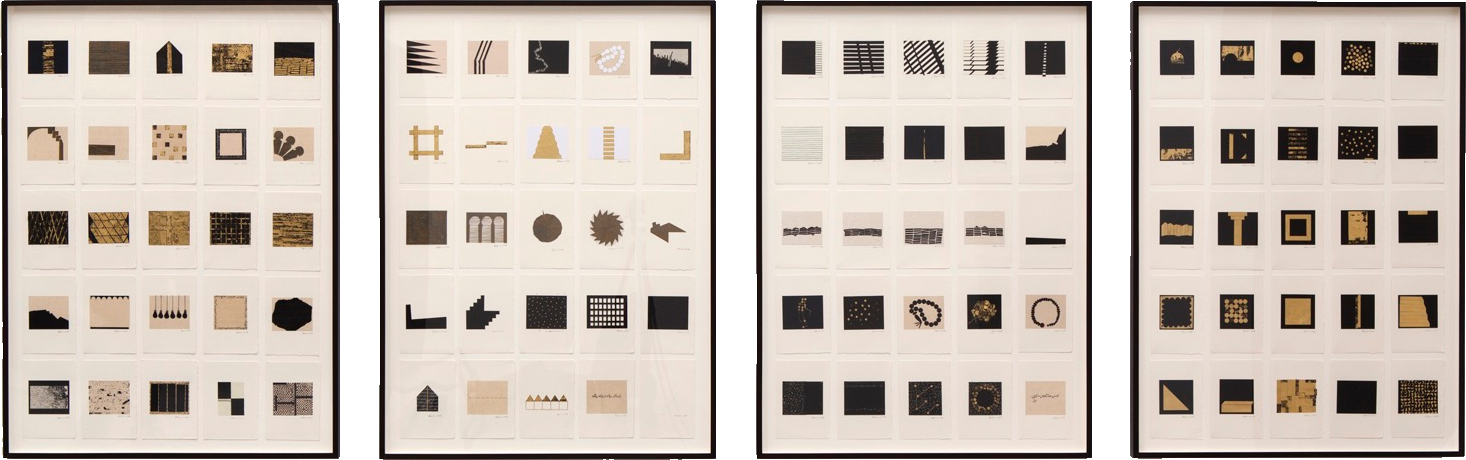
Letters from Home2004
Reading the theme
Memory as lived experience
Memory enters Zarina’s work through things that have survived contact: a letter, a crease, handwriting, a route, a familiar plan. These fragments remain incomplete, and that incompleteness is part of their truth.
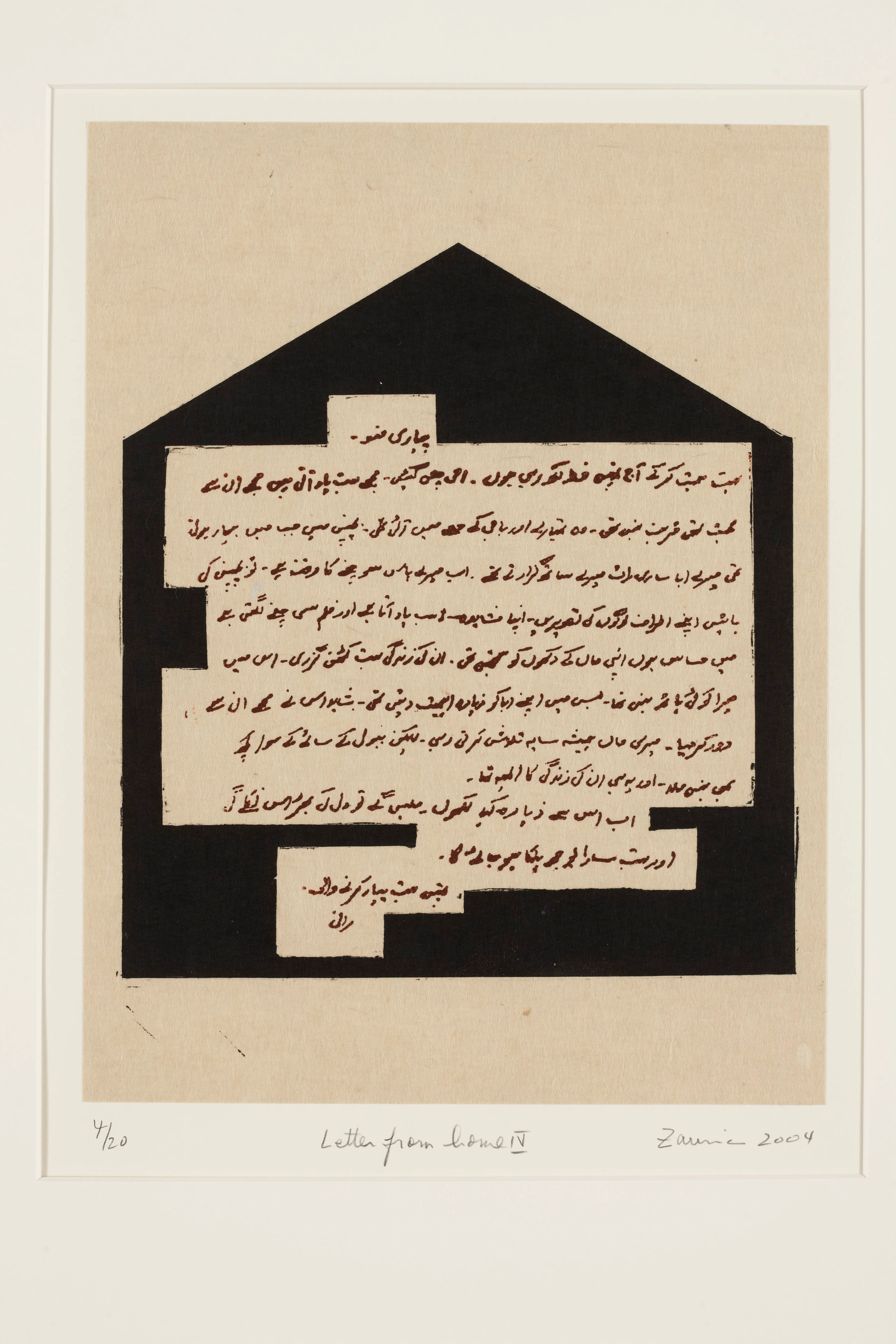
Letters gave distance a material form. Their handwriting, folds, creases, and missing passages allowed private history to enter the work without becoming illustration.
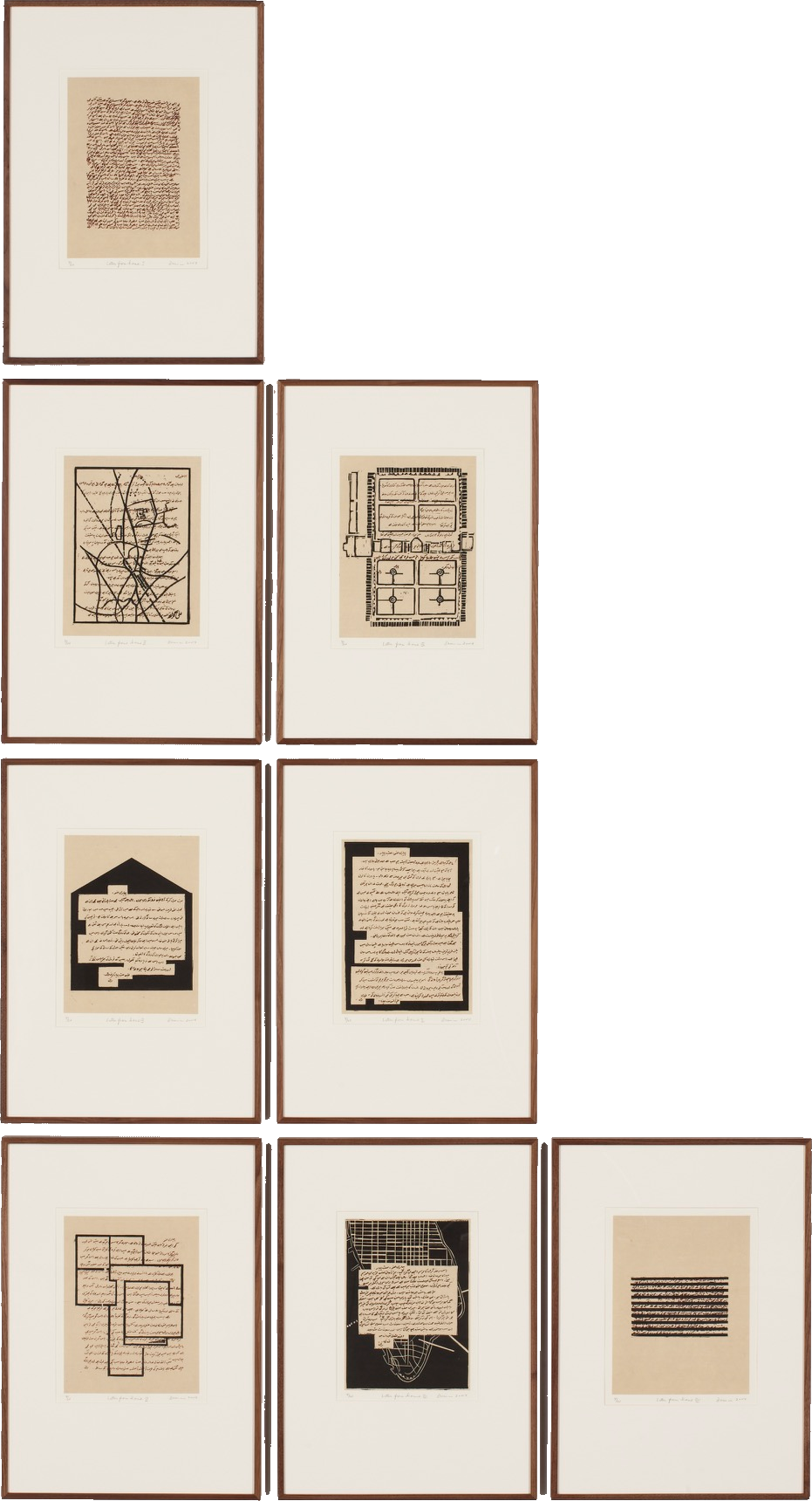
Letters from Home holds correspondence and absence together. The installation must be seen as a complete constellation: each sheet retains its place within the whole.
Memory in Zarina’s work is rarely complete or stable. It survives through fragments—a familiar plan, a route, a word, a repeated mark—and through the spaces that remain around them.
Serial forms let her return without pretending to recover the past intact. Each repetition measures change: in the remembered image, in the person remembering, and in the distance between them.
Ways of looking
Three paths into memory
Biography, material, and form meet differently in every series.
01
Handwriting as presence
In Letters from Home, correspondence from her sister becomes image, texture, and voice. The writing is intimate before it is legible; its scale and rhythm preserve the pressure of a private exchange.
02
The fragment
Zarina rarely attempts to reconstruct a seamless past. She works with partial evidence—cropped text, isolated signs, repeated marks—allowing absence to remain visible around what has been kept.
03
Repetition and return
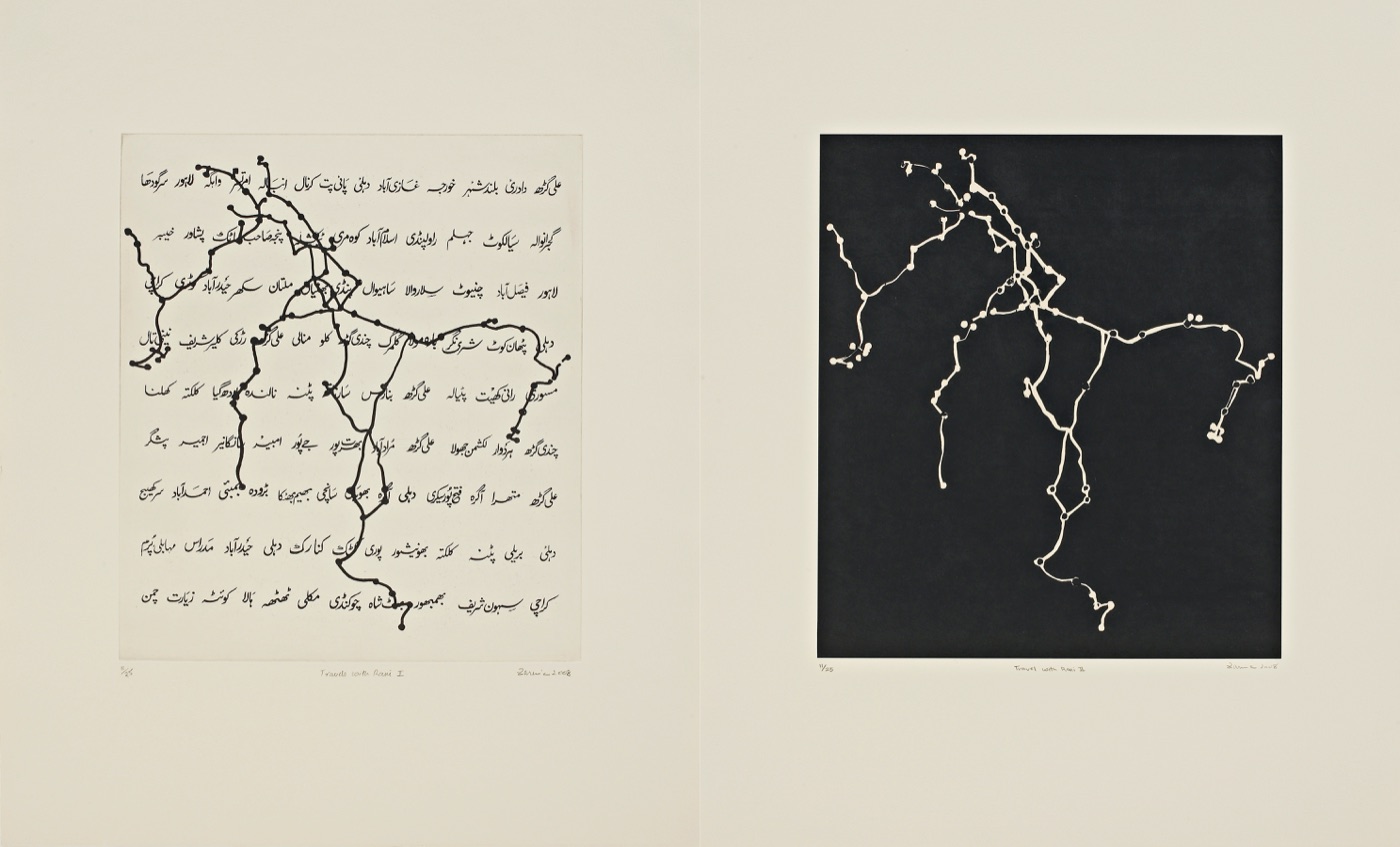
Portfolios and serial works let an image be approached again and again. A repeated house, road, or line does not settle memory; it measures how memory changes with every return.