Urdu as a home that could survive distance and exile.
Urdu enters the work as sound, script, inheritance, and place. Words do not explain the images from outside; they help generate their forms from within.
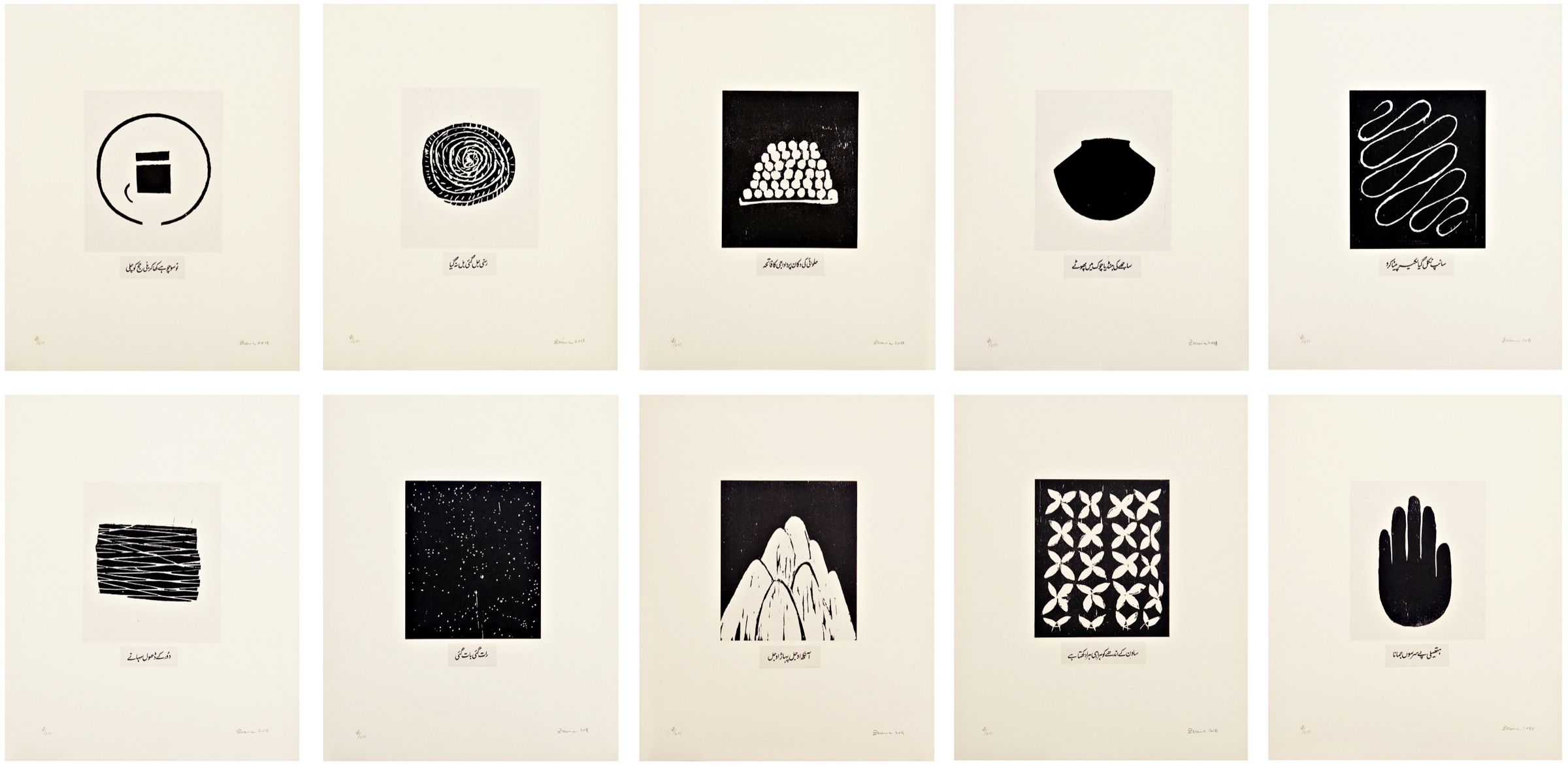
Urdu Proverbs, 2011Zarina
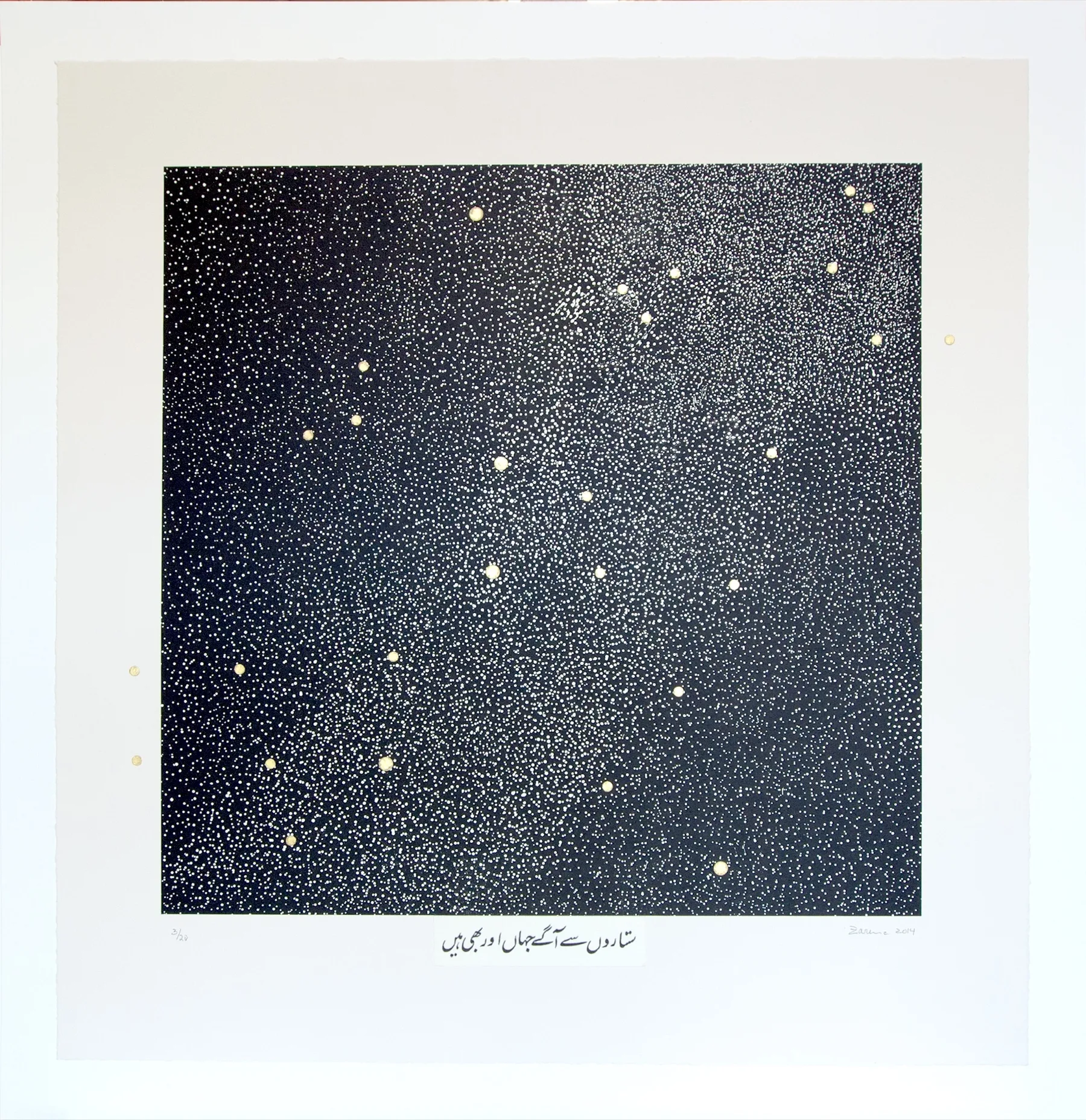
Beyond the Stars2014
Reading the theme
Language as lived experience
Urdu was not an explanatory caption added to Zarina’s images. It was a working material: a sound, a script, a family inheritance, and a cultural location that remained available across distance.
Urdu offered Zarina a portable home. Words, proverbs, and poetry became visual structures as well as carriers of cultural memory.
The script is not ornament. It asks how language survives migration—and what becomes visible when a reader cannot translate it.
A word often precedes the image in Zarina’s process. Meaning moves between sound, script, carved mark, and printed form rather than settling into a single illustration.
By sometimes withholding translation, she preserves the intimacy of Urdu while allowing its rhythm and graphic presence to address viewers beyond literal reading.
Ways of looking
Three paths into language
Biography, material, and form meet differently in every series.
01
Words before images
Zarina often began with a word or phrase and developed an image in response. Meaning therefore moves in both directions: script prompts form, while form changes how the word is encountered.
02
Translation withheld
Many works leave Urdu untranslated. This protects the intimacy and cultural specificity of the language while asking viewers unfamiliar with the script to experience its visual and material presence.
03
A language carried forward
The 1991 proverb portfolio joined family memory to a public print tradition. Its 2011 re-strike placed Urdu directly beneath each image, making language inseparable from the work’s visual field.