
Life · Family
Memory as a lasting possession
Parents, siblings, marriage, chosen family, and the relationship with Rani that held Zarina’s life across distance.
“Memory is the only lasting possession we have. I have made my life the subject of my work.”
Zarina used images of home, the places she visited, and the stars above her as evidence of experience—a way of knowing that the life she remembered had not been imagined.
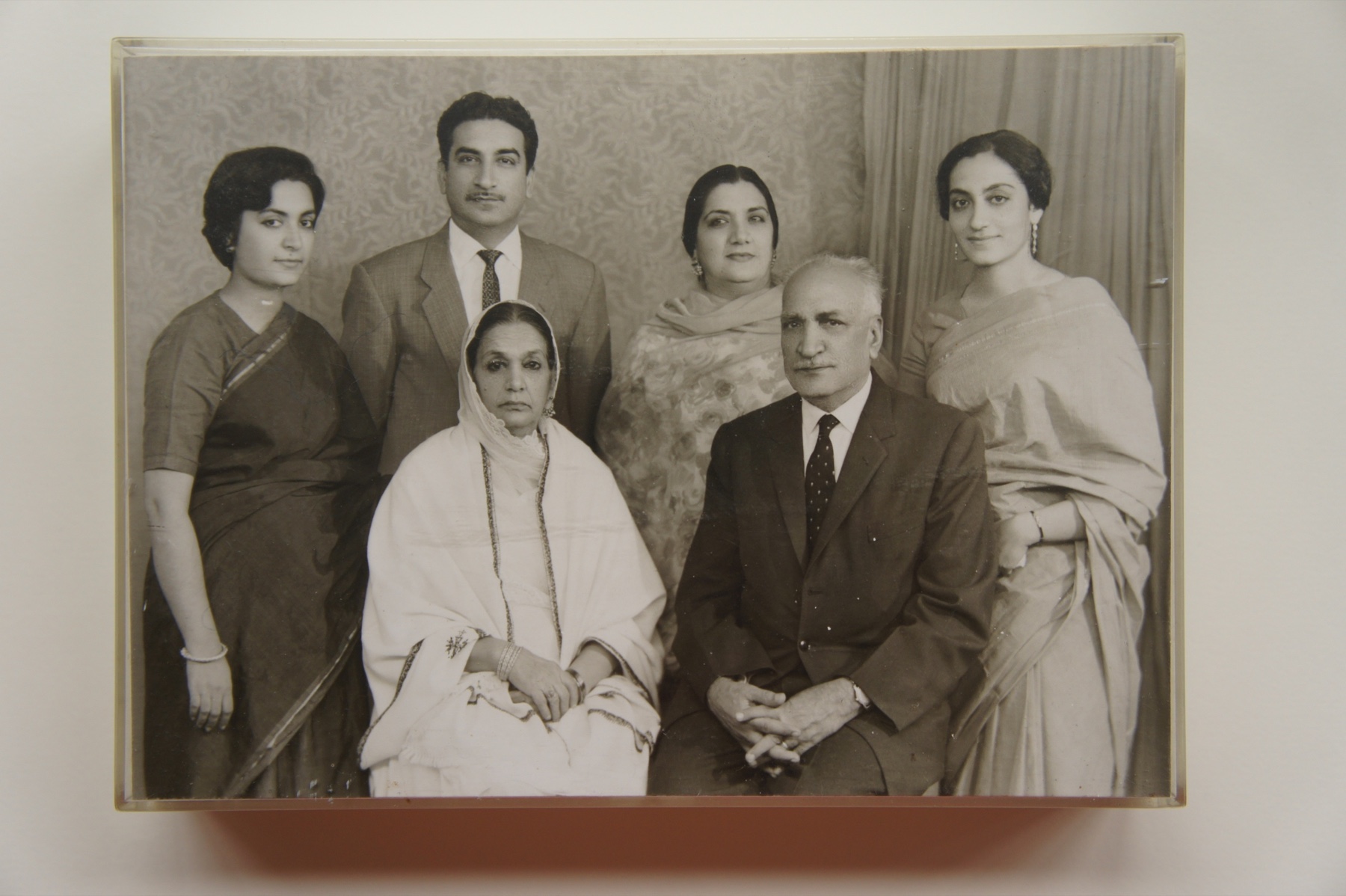
The Rasheed family
An intellectual home
Sheikh Abdur Rasheed came from Punjab and made his life in Aligarh, where he was a historian and professor at Aligarh Muslim University. Fahmida Begum was born in Sialkot, near Kashmir, and married before she had the opportunity to attend college.
They had five children: Hamid, who died young, Saeeda, Aslam, Kishwar, and Zarina. Their father believed Aligarh’s intellectual and cultural environment would give his children greater possibilities. Zarina earned a degree in mathematics; Rani completed graduate study in history and also studied law—unusual paths for women of their generation.
After her father retired, Zarina’s parents moved to Karachi in 1959. Rani remained independently in Aligarh before moving to Pakistan in 1963. Zarina, who had married Saad Hashmi in 1958, began a life shaped by his diplomatic postings.
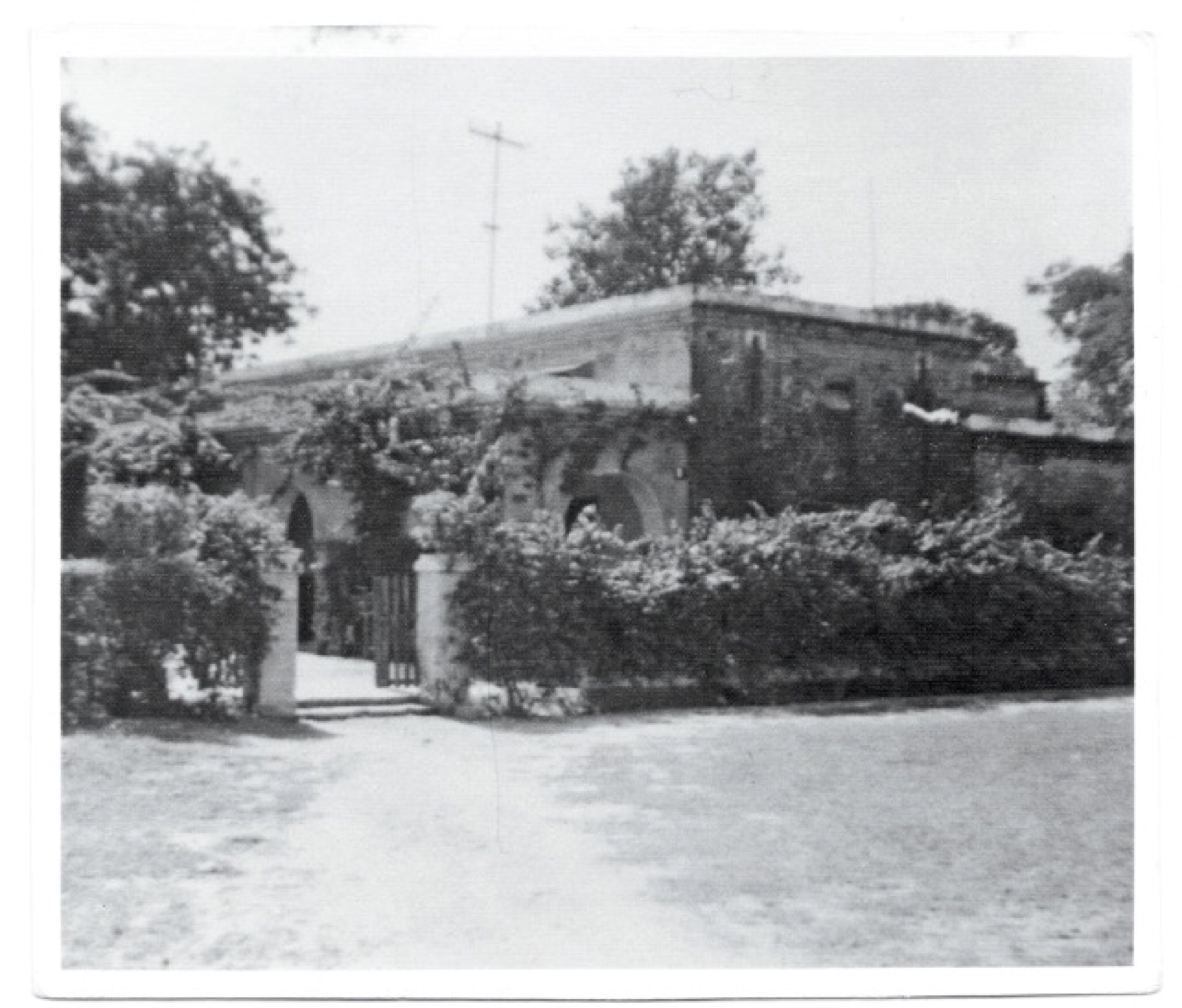
The remembered house
The House at Aligarh
At night I go to the House at AligarhAmi waits for the motia blossomSaeeda brings her childrenAslam tells a storyRani asks me to sing a songAbba comes in to look at usAt night we all come to the House at AligarhZarina, The House at AligarhContinue to Aligarh →
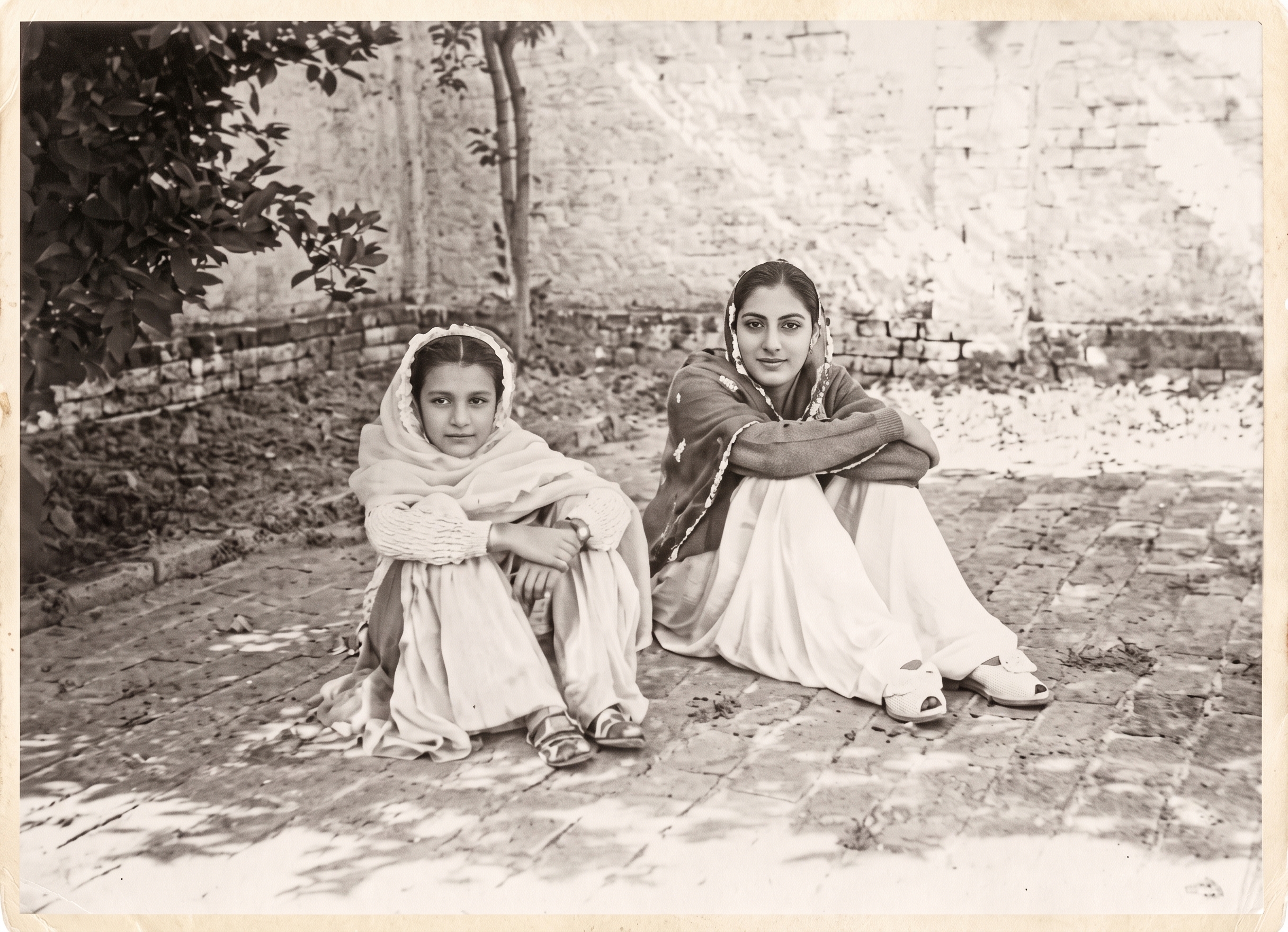
Sisters
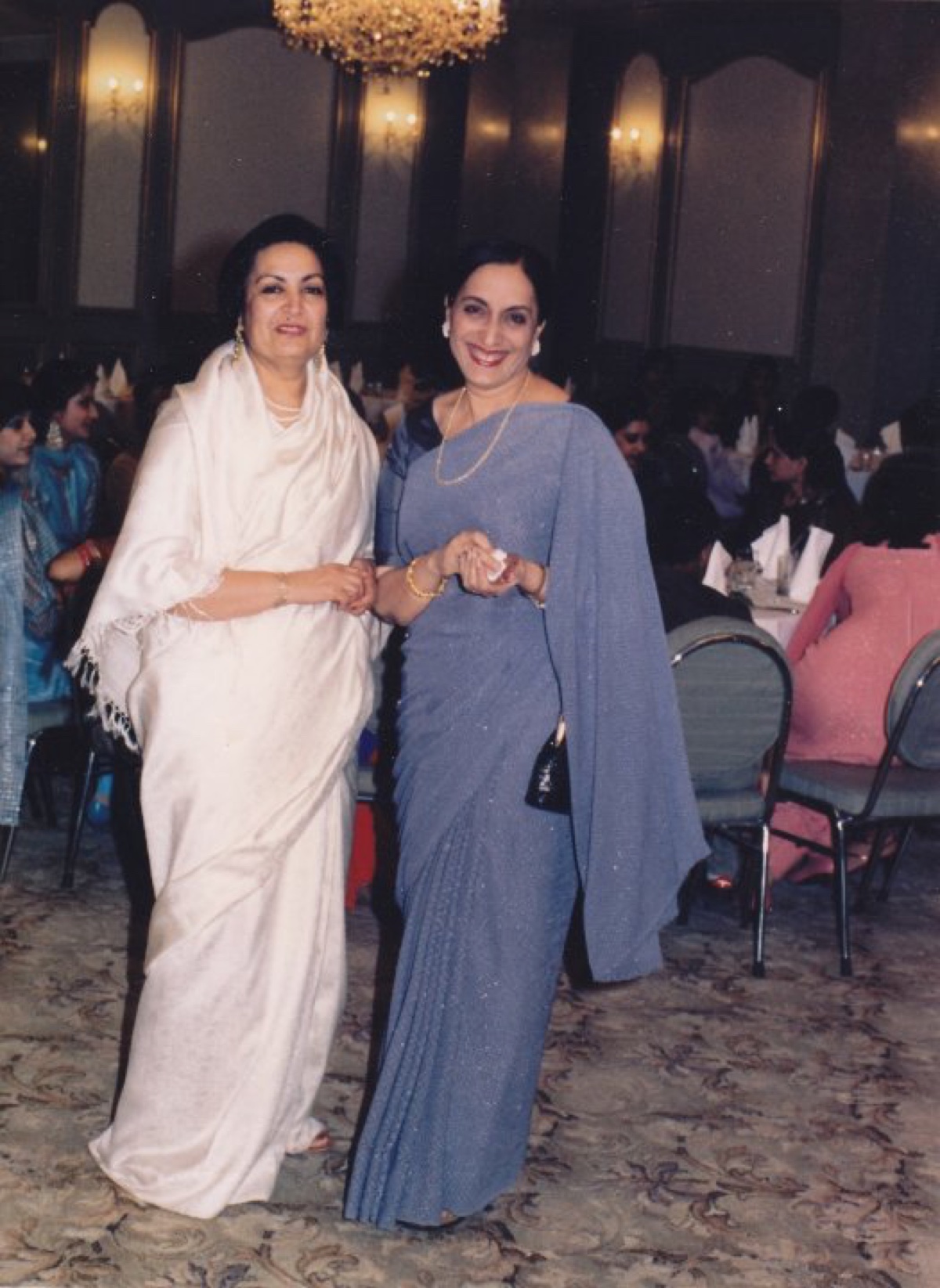
Zarina and Rani
Rani was an elder sister and a maternal presence. Their shared childhood in the courtyard and garden became a private language that survived distance. Zarina sought Rani’s advice in personal and professional decisions, and the sisters worked through ideas together.
After Rani married Mashkoor Chishti, Zarina came to regard him as a brother. His family connection to the Chishti Sufi tradition and his spiritual guidance strengthened Zarina’s interest in Sufism. From 1977 until 2013, she spent many summers and winters with Rani and Mashkoor in Karachi.
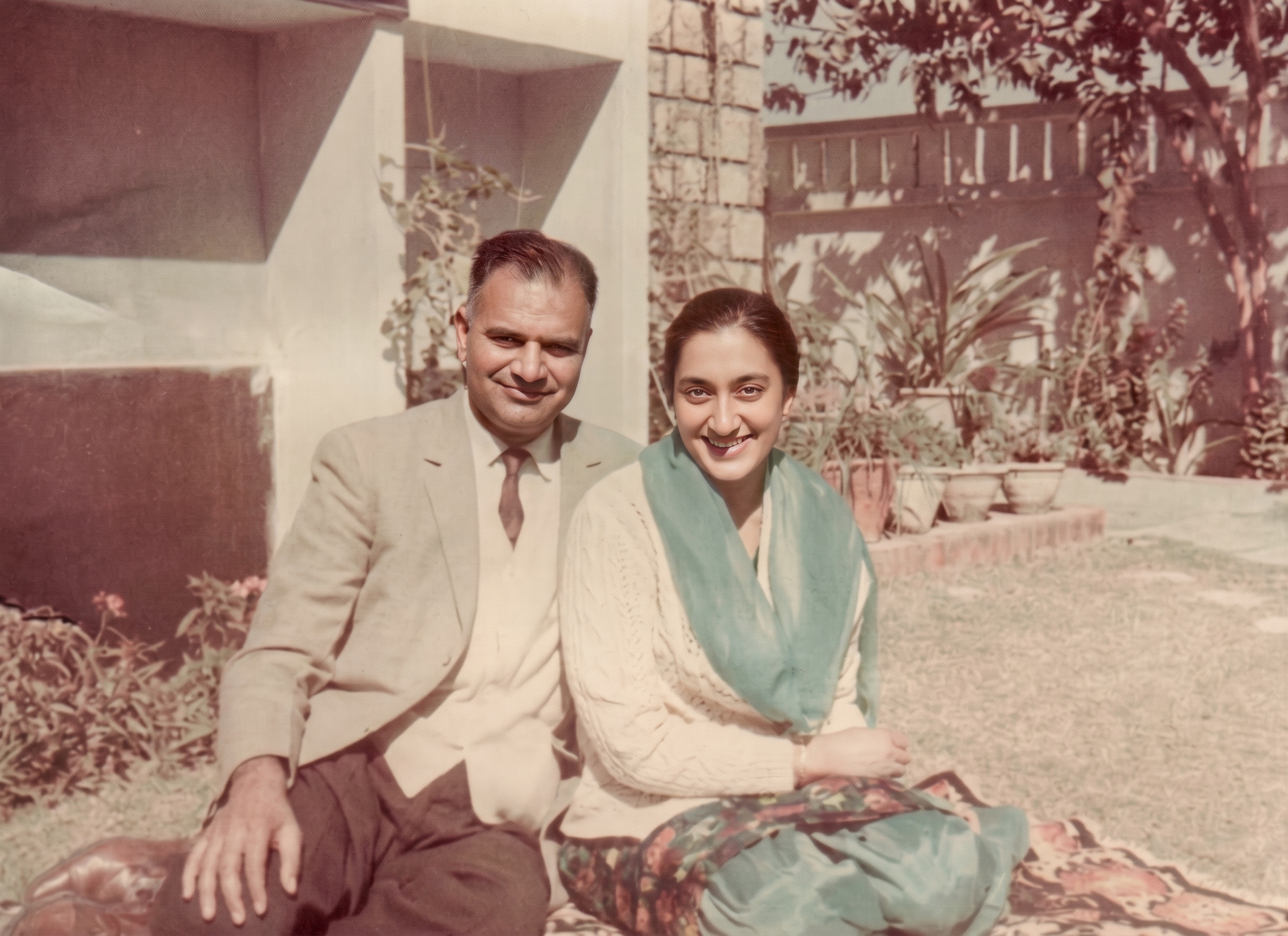
Marriage and travel
Saad Hashmi
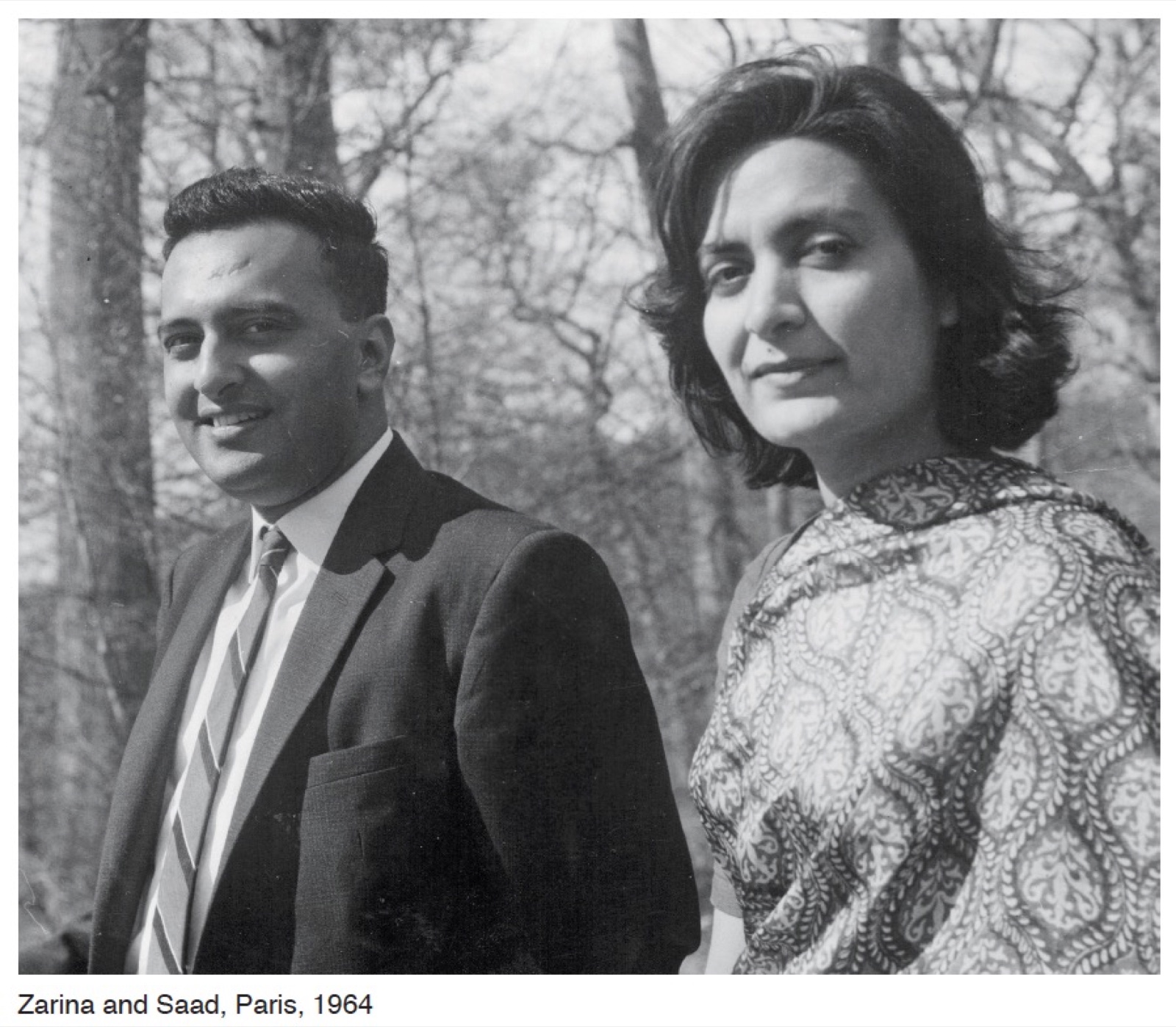
Zarina married Saad Hashmi in 1958, when she was twenty-one. A classmate of Rani’s at Aligarh Muslim University, he entered the Indian Foreign Service. His diplomatic postings carried the couple through Bangkok, Delhi, Paris, Bonn, and New York.
The formal obligations of diplomatic life did not interest Zarina, but travel did. Architecture, streets, rituals, and materials entered her visual memory. In Bangkok, the golden spires of temples—including Wat Arun—became brighter in reflected sunlight. Decades later, gold entered a practice long associated with black, white, and grey. During a period apart from the marriage, she lived independently in Tokyo and studied Japanese woodblock printing.
Saad died in 1977 at forty-five while visiting Delhi. With the support of Rani, Mashkoor, and friends including Clare, Humra, Judy, and Krishna, Zarina remained in New York and built an independent life there.
An extended family
“Munni Ami”
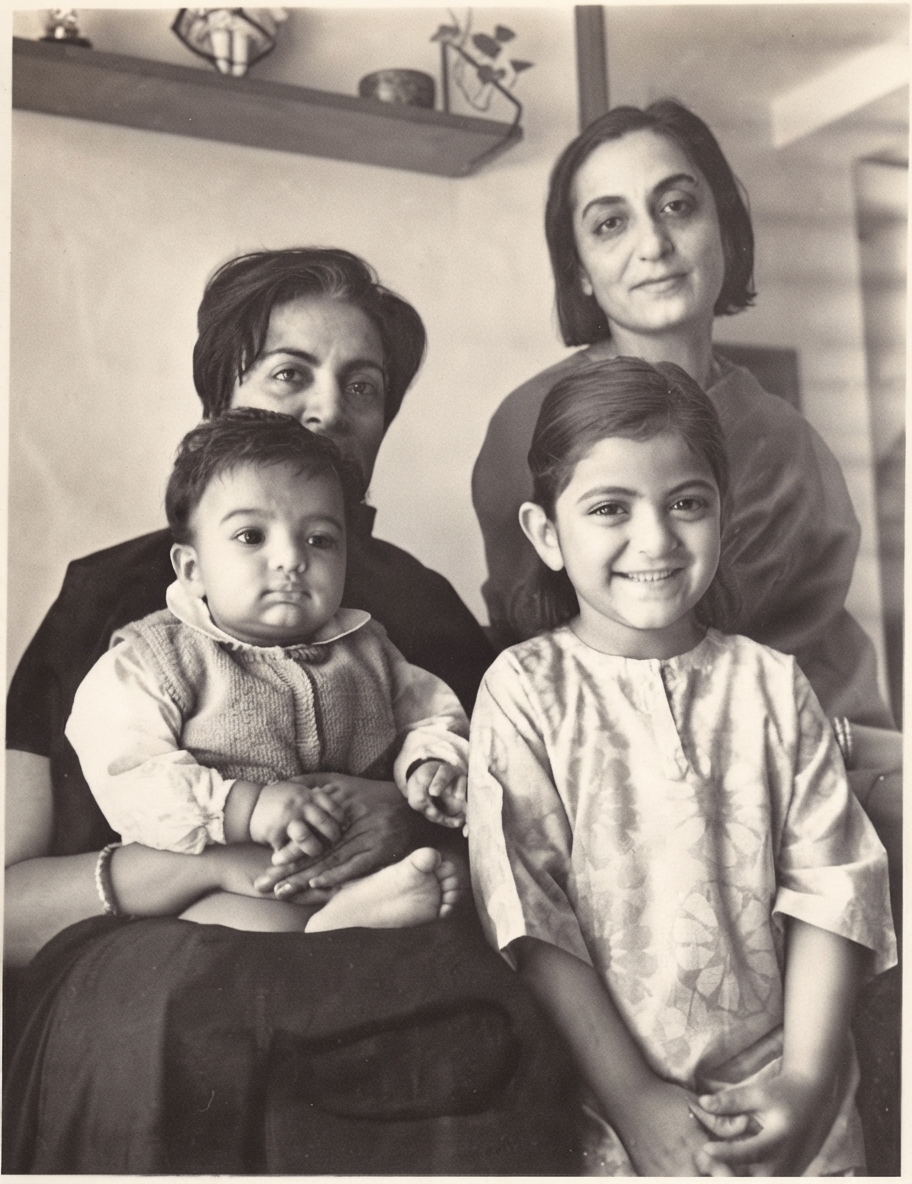
Zarina had no children, but she treated Rani’s children, Saima and Imran, as her own. They called her Munni Ami—“Little Mother.” Rani asked them to continue caring for her sister, and during Zarina’s declining health she moved to London to be close to Saima, Imran, and her great-grandniece Shanaya.
The family relationship also entered the art through Letters from Home. Rani had written eight letters during difficult moments but never posted them. They recorded the deaths of their parents, the sale of a beloved home, her children moving away, and the absence of Zarina. Years later, the letters became an intimate portfolio in which handwriting, Urdu, distance, and loss occupy the same surface.
A family held across distance
A place to return to
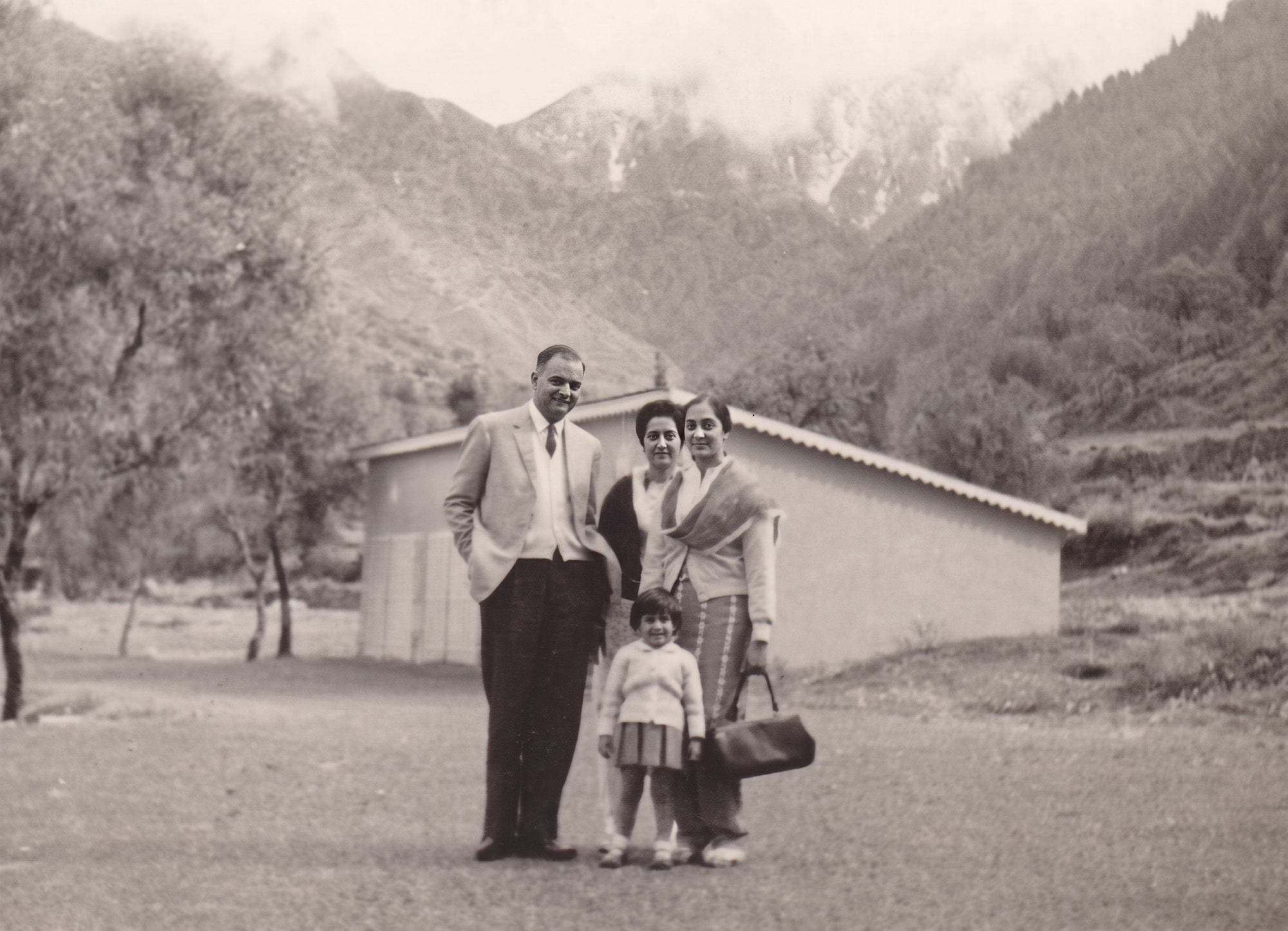
Throughout Zarina’s years of travel and independent life, Rani, Mashkoor, Saima, and Imran remained a constant family circle. Visits, letters, and long conversations gave continuity to a life lived across many cities.
These relationships also shaped how her story was remembered. Family photographs and correspondence keep the intimate history beside the art: the people, places, and exchanges from which so much of the work grew.