Life · Childhood

The house at Aligarh

The family house, its rooms and courtyard, the garden, first flight, Partition, and Zarina’s bond with her sister Rani formed a vocabulary she returned to throughout her life.

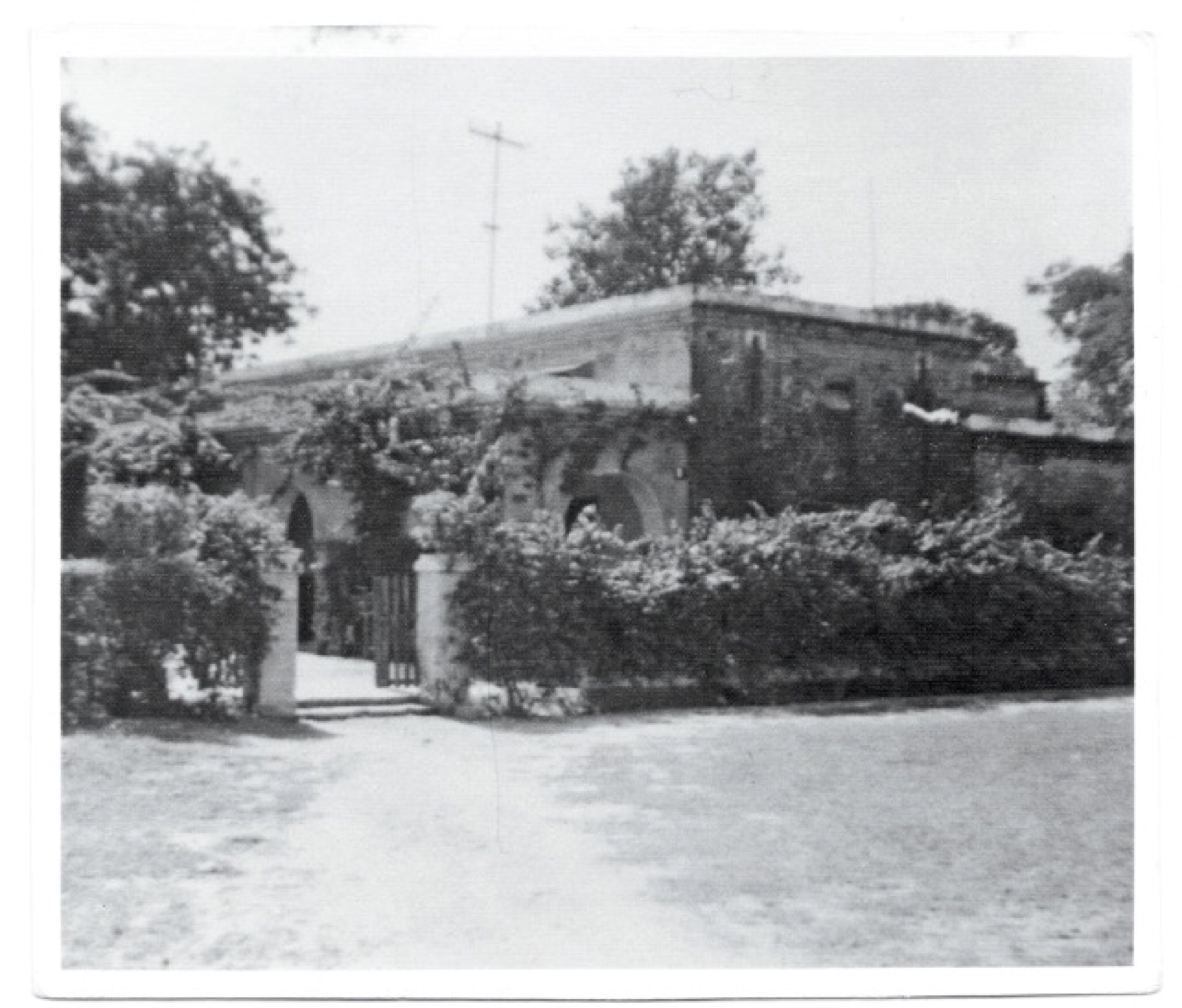
The Rasheed family house at Aligarh Muslim University
The family house · Aligarh Muslim University

1937–1958

A whole universe in four walls

Zarina was born on 16 July 1937 in Aligarh, Uttar Pradesh, the youngest child of Sheikh Abdur Rasheed and Fahmida Begum. Her siblings were Hamid, Saeeda, Aslam, and Kishwar, known as Rani. Hamid died before Zarina was born.

Her father was a professor of history at Aligarh Muslim University. The family’s faculty house was built of unbaked brick and organized around an open courtyard, with westernized rooms for men and more traditional quarters for women. Its doors, verandas, walls, and plan became a lifelong visual vocabulary.

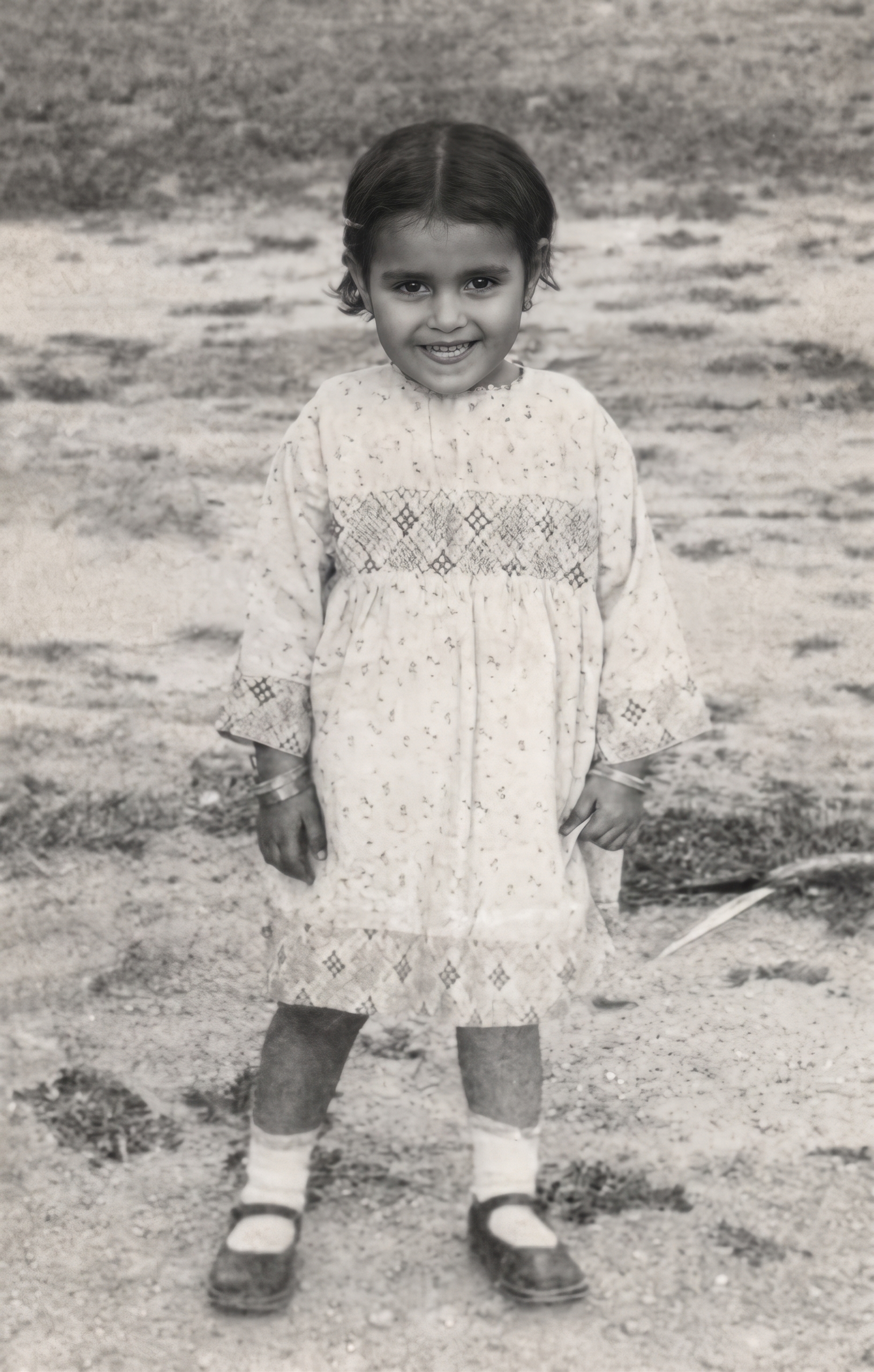
Zarina as a young child outdoors in Aligarh
Zarina as a child · Aligarh · family archive
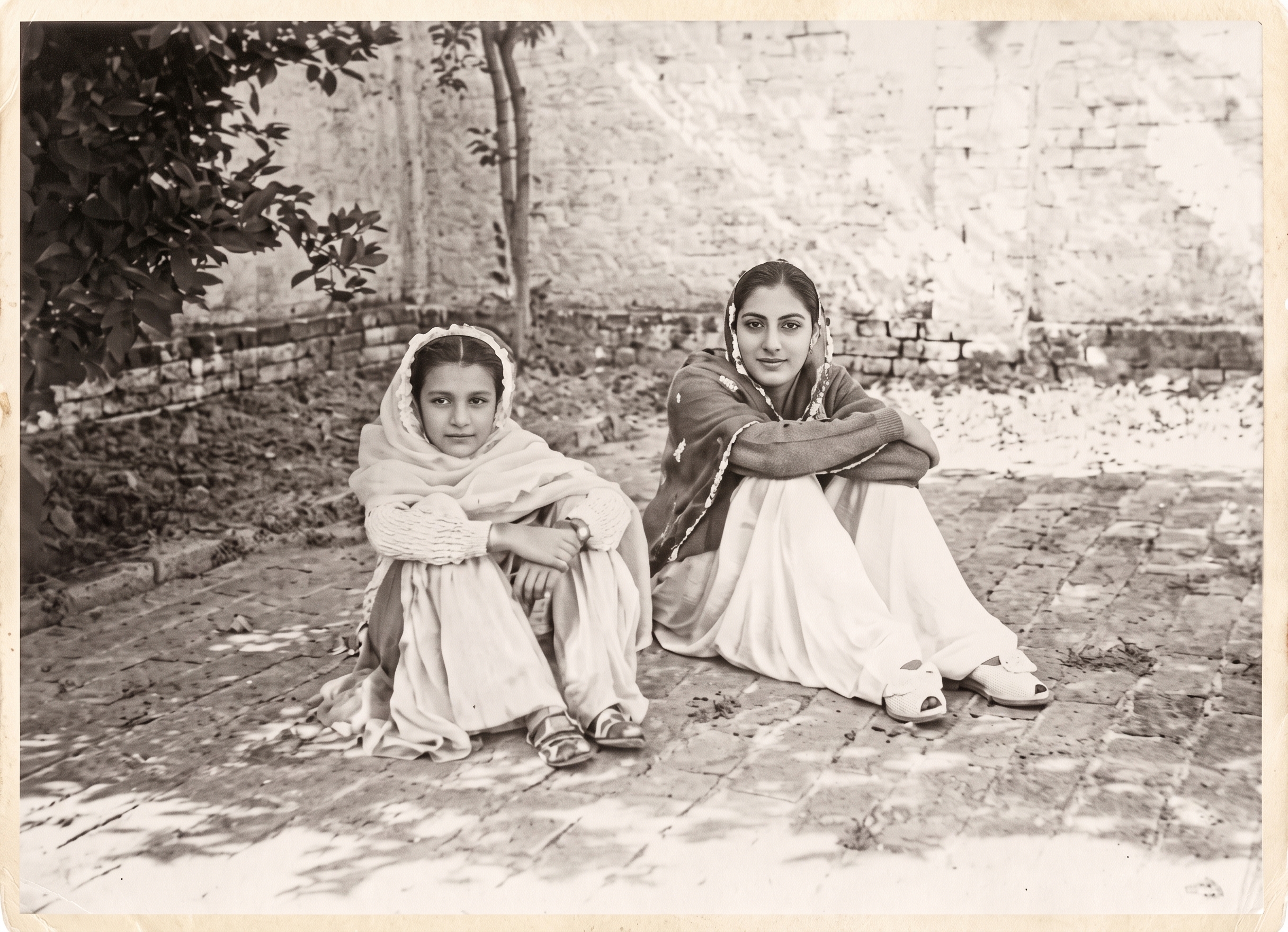
Zarina, left, and her sister Rani seated outdoors in Aligarh
Zarina, left, and Rani · Aligarh, 1948
01

Finding the house

When you come out of the train stationTake a rickshaw (tuk-tuk) to the tar-wala (cable) bungalowYou will come out on Railway RoadOn your left is Naqvi Park, next to a gothic-looking clock towerRailway Road becomes University RoadOn your right is Lal Diggi, a big pond full of water chestnutsOn your left is Victoria Gate, the main entrance to the campusContinue on University Road, at the crossroad turn right on Shibli RoadThe name is carved in red stone, in English and UrduFollow this gravel road, to an open area with two big fruit treesTurn right again, you will see the red brick house set backYou cannot miss its bougainvillea-covered fenceIt should not take you very long to get thereIt is only seven thousand four hundred and thirty eight miles away!
Zarina, Directions to My House
02

The courtyard and garden

Each part of the house had a bathroom, dressing room, and long veranda. The courtyard became a communal kitchen for Eid and weddings, a playground during hot afternoons, and a place where Zarina and Rani slept beneath the stars. Fahmida and Abdur Rasheed’s garden—especially flowers grown for fragrance—made scent another architecture of memory.

03

Rani

Kishwar, known as Rani, was Zarina’s elder sister, confidante, and creative interlocutor. The two were inseparable as children; Zarina continued to seek her advice about both work and life until Rani’s death in 2013.

04

First flight

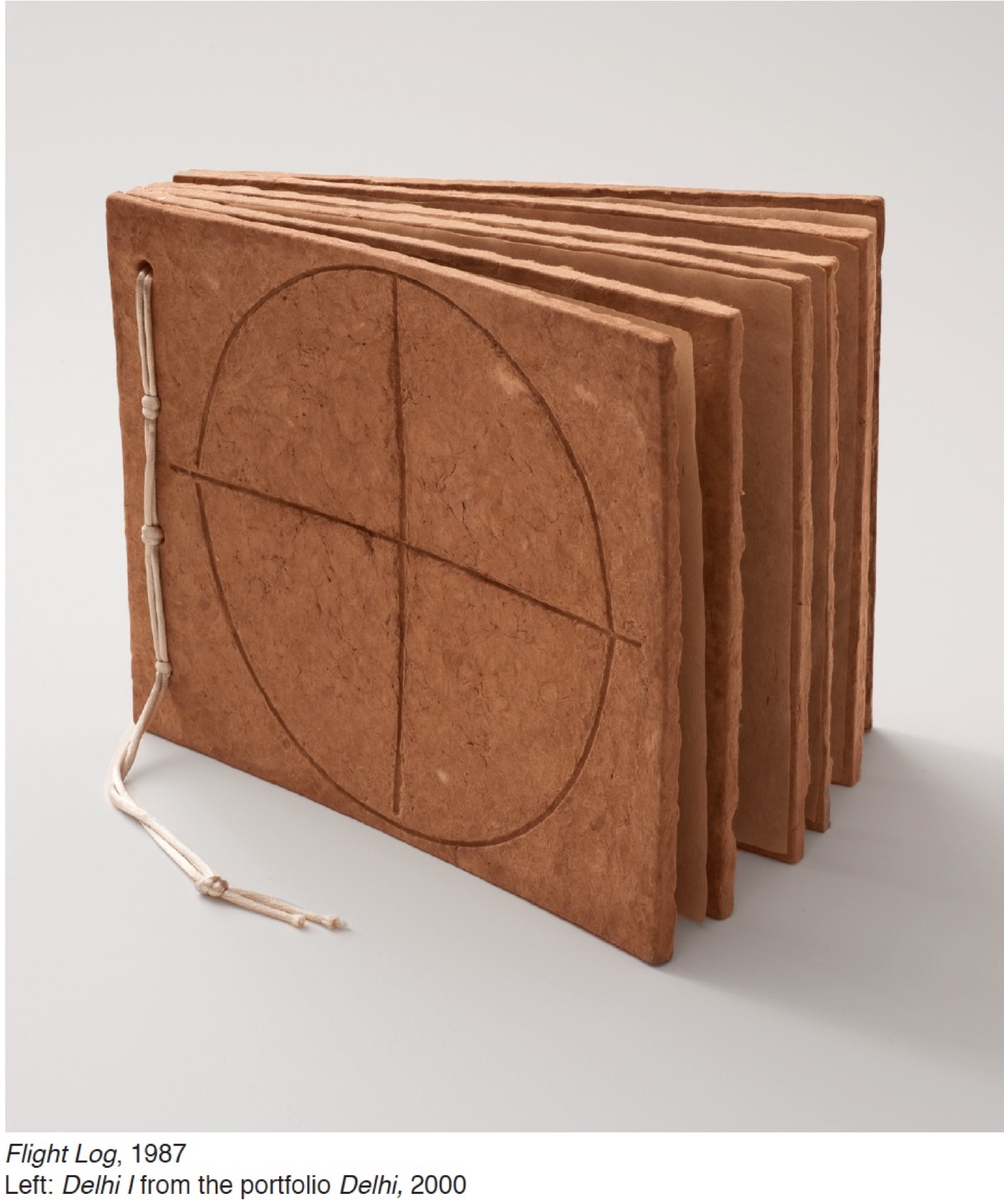
At about five, Zarina’s father took her on an aeroplane ride. Seeing Aligarh from above awakened an enduring fascination with topography and architecture. In her twenties she joined the Delhi Flying Club and learned to glide; the language of ascent, disorientation, and having no place to land later crossed her sculpture, prints, and writing.

05

Partition

Zarina was ten when British India was divided in 1947. She and her siblings were first sent to Delhi and then went to Lahore; Zarina later returned to India with her father. The violence and mass displacement were experienced from the Indian side of the new border, but their aftershocks—separation, migration, destroyed homes, and divided families—remained central to how she understood a line.

Flight Log, 1987, a bound handmade-paper sculpture by Zarina
Flight Log, 1987
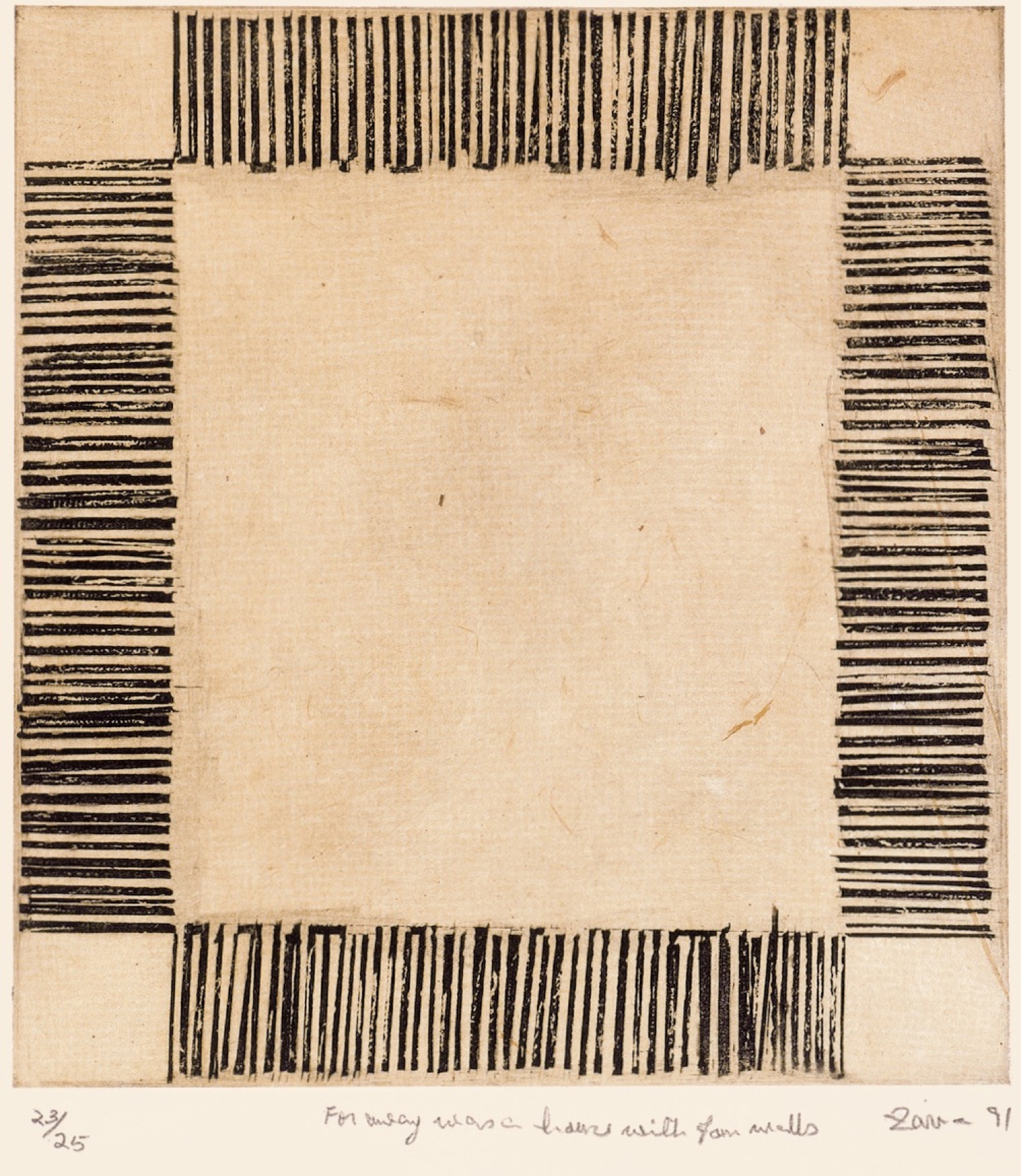
House with Four Walls, 1991, by Zarina
House with Four Walls, 1991

Flight Log

I tried to flyGot lost in the thermalCould never go backHaving lost the place to land.

“These four lines are my whole biography. I can’t go back because there’s no place to land. Where will I go?”

Zarina, accompanying text for Flight Log

House with Four Walls

Far away was a House with Four WallsOn rainy nights the ghost stopped by the pillarThe black snake came in the houseOn long summer afternoons everyone sleptI run outside to play and burn my feetOne night we heard the owl in the treeThe one-eyed maid said we would have to move far away
Zarina, House with Four Walls